
 Natalie N. Arnott
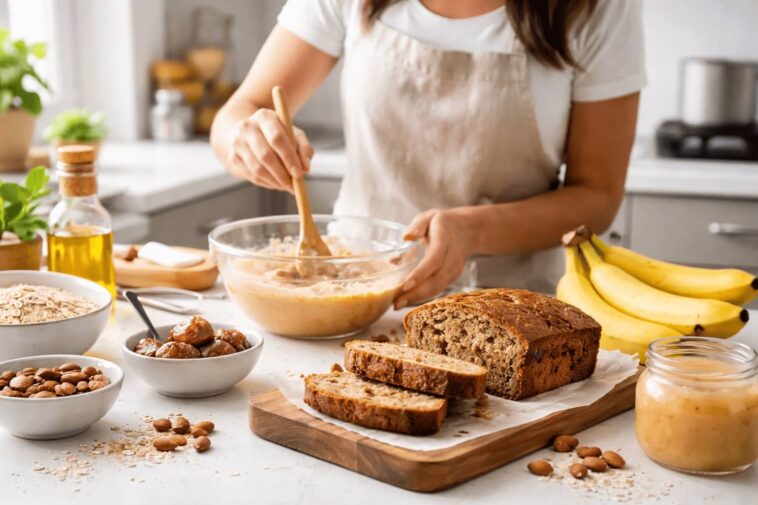
Healthy baking without sugar is no longer a niche trend — it’s becoming a practical strategy for people who want to reduce added sugars while still enjoying homemade treats. Instead of relying on refined sweeteners, this approach focuses on whole-food ingredients that provide natural sweetness, structure, and moisture.
If you’re looking for a practical example, this simple sugar free baking recipe shows how fruit-based sweetness can create a naturally moist and satisfying cake without refined sugar.
The goal of healthy baking without sugar isn’t restriction. It’s smarter formulation. When done correctly, you can create cakes, muffins, cookies, and breakfast bakes that taste rich and satisfying — without depending on refined sugar.
Why Healthy Baking Without Sugar Matters
According to the Centers for Disease Control and Prevention (CDC), Americans consume more added sugar than recommended, which can increase risk of weight gain, blood sugar instability, and long-term health concerns.
(Source: https://www.cdc.gov/nutrition/data-statistics/added-sugars.html)
The American Heart Association recommends limiting added sugar to protect cardiovascular health.
(Source: https://www.heart.org)
Healthy baking without sugar helps you:
- Reduce overall added sugar intake
- Support stable blood glucose levels
- Improve sustained energy
- Retrain your palate away from overly sweet foods
- Align desserts with long-term weight management goals
Importantly, this approach does not eliminate sweetness — it changes its source.
How Sugar Works in Traditional Baking
Before mastering healthy baking without sugar, you need to understand what sugar actually does.
Sugar provides:
- Sweetness
- Moisture retention
- Tenderness
- Browning through caramelization
- Structural support
- Shelf-life extension
When removing refined sugar, you must compensate for at least some of these functions. Simply omitting sugar often results in dry, pale, or dense baked goods. Healthy baking without sugar requires strategic ingredient adjustments — not just subtraction.
Best Ingredients for Healthy Baking Without Sugar
1. Whole Fruit
Fruit is one of the strongest foundations for healthy baking without sugar.
Best options:
- Very ripe bananas
- Unsweetened applesauce
- Blended dates
- Pureed pears
- Unsweetened crushed pineapple
Fruit delivers natural sugars, fiber, water content, and micronutrients. For example, mashed banana can replace both sugar and part of the fat in muffins or quick breads.
Tip: The riper the fruit, the sweeter the result.
2. Date Paste
Date paste works exceptionally well in brownies, snack bars, and dense cakes.
How to make it:
- Soak pitted dates in hot water for 10–15 minutes.
- Blend with a small amount of soaking water until smooth.
Dates provide concentrated sweetness along with fiber and minerals, making them a powerful tool in healthy baking without sugar.
3. Unsweetened Applesauce
Applesauce adds moisture and mild sweetness without overpowering flavor.
General swap guideline:
Replace 1 cup of sugar with ¾–1 cup of applesauce and slightly reduce other liquids.
4. Flavor Enhancers That Increase Perceived Sweetness
Sweetness perception is influenced by aroma and depth.
Use:
- Cinnamon
- Nutmeg
- Vanilla extract
- Almond extract
- Cocoa powder
- Citrus zest
Layering these ingredients enhances flavor complexity, making healthy baking without sugar taste richer without adding sweeteners.
Texture Strategies for Healthy Baking Without Sugar
Removing sugar affects structure. These adjustments help maintain quality.
Add Healthy Fats
Fat improves tenderness and mouthfeel.
Effective options:
- Greek yogurt
- Nut butters
- Avocado (in brownies)
- Olive oil
- Coconut oil
These prevent dryness and improve satisfaction.
Balance Fiber Carefully
Whole grain flours increase nutrition but can create density.
For better texture:
- Combine whole wheat with lighter flour
- Avoid overmixing
- Monitor liquid balance
Healthy baking without sugar often requires small batch adjustments. Precision improves results.
Adjust Liquid Levels
Fruit-based ingredients add moisture.
If batter seems too wet:
- Slightly reduce milk
- Add 1–2 tablespoons flour
- Increase baking time slightly if needed
Common Mistakes in Healthy Baking Without Sugar
Expecting Identical Taste to Traditional Desserts
Your palate adapts over time. After reducing added sugar for several weeks, naturally sweet desserts taste significantly sweeter.
Automatically Using Artificial Sweeteners
Some sugar substitutes may cause digestive discomfort or leave an aftertaste. If the goal is whole-food formulation, fruit-based sweetness is often preferable.
Ignoring Structural Changes
Without refined sugar, cookies may brown less. Pale color does not always mean underbaked.
Recipes That Work Best for Healthy Baking Without Sugar
Certain desserts adapt better than others:
- Banana bread
- Oatmeal cookies
- Breakfast muffins
- Energy bars
- Baked oatmeal
- Flourless brownies
Dense, moist recipes are ideal. Delicate sugar-dependent desserts like meringues or caramel are more difficult to replicate.
How Healthy Baking Without Sugar Fits a Balanced Lifestyle
Desserts do not need to disappear from a healthy eating pattern. In fact, sustainable approaches prevent restriction–binge cycles.
Healthy baking without sugar works best within an overall eating structure that emphasizes:
- Protein
- Fiber
- Healthy fats
- Whole foods
If you’re building a long-term nutrition strategy, pairing homemade desserts with a structured balanced diet helps maintain stability without extremes.
The goal is consistency — not perfection.
Quick Evaluation Checklist
When testing a recipe, ask:
- Does it rely on whole-food sweetness?
- Is the texture moist but not gummy?
- Does it include fiber or protein?
- Are ingredients minimally processed?
- Would I realistically make it again?
If most answers are yes, the formulation supports healthy baking without sugar effectively.
Who Benefits Most From Healthy Baking Without Sugar?
This approach is especially helpful for:
- Individuals monitoring blood sugar
- Parents reducing added sugar for children
- Adults working on weight management
- Anyone seeking steadier daily energy
It’s also ideal for those who prefer gradual change over strict elimination diets.
FAQ: Healthy Baking Without Sugar
Does healthy baking without sugar mean zero sweetness?
No. It typically eliminates refined sugar while allowing natural sweetness from whole fruit.
Will desserts taste bland?
Not when flavor is layered properly using ripe fruit, spices, and healthy fats.
What about honey or maple syrup?
They are less refined but still count as added sugars.
Is it automatically lower calorie?
Often, but not always. Nuts and dried fruit are calorie-dense. Portion awareness still matters.
Can cookies stay crispy?
Crisp texture is harder to achieve. Expect softer results.
Conclusion
Healthy baking without sugar is about intelligent substitution — not deprivation. By understanding sugar’s functional role and replacing it strategically with fruit, spices, and nutrient-dense ingredients, you can create desserts that feel indulgent while supporting long-term health goals.
Start simple. Try banana bread or oat muffins. Adjust gradually. As your palate adapts, naturally sweet flavors become satisfying — and refined sugar becomes less necessary.