
 Natalie N. Arnott

Calorie cycling—sometimes called calorie shifting—is a flexible eating approach where your daily calorie intake intentionally varies across the week. Instead of eating the same number of calories every day, you alternate higher-calorie and lower-calorie days around your lifestyle, training, and recovery needs. Done well, calorie cycling for weight loss can make fat loss feel more sustainable, protect energy levels, and reduce the mental burnout that derails so many diets. For a hands-on primer on tracking and prep, start with this guide to calorie cycling—then come back here for the bigger picture.
Below, you’ll learn how calorie cycling works, who it helps most, how to set it up safely, and common mistakes to avoid—so you can decide if it’s right for you.
What Is Calorie Cycling (and How Is It Different From a Regular Diet)?
Traditional diets keep calories fixed day after day. Calorie cycling does the opposite: it plans intentional fluctuations. Over the week, your average intake still creates a calorie deficit for fat loss, but individual days rise and fall.
Typical patterns include:
- Training vs. rest days: Higher calories on lifting days; lower on rest days.
- Weekday/weekend split: Tighter weekdays, more flexible weekends.
- Refeed days: Periodic higher-calorie days to support hormones and adherence.
The key is that cycling is planned, not reactive. You’re not “cheating”; you’re allocating calories where they help most.
Why Calorie Cycling Can Support Weight Loss
1) Better adherence (the underrated superpower)
Most people don’t fail because they lack willpower—they fail because rigid plans clash with real life. Cycling allows social meals, tougher workouts, or long workdays without blowing the week.
2) Energy and performance
Strategic higher-calorie days can fuel hard training, improve gym performance, and support recovery—making it easier to preserve lean muscle while losing fat.
3) Appetite management
Rotating intake can reduce the grind of constant hunger. Many find lower-calorie days easier when they know a higher-calorie day is coming.
4) Metabolic and hormonal considerations
While extreme claims are overblown, periodic higher intake may help mitigate some adaptive responses to prolonged dieting (like drops in training performance or mood).
Is Calorie Cycling Right for You?
It can be a good fit if you:
- Train several days per week and want fuel on workout days
- Have social commitments you don’t want to avoid
- Prefer flexibility over strict daily targets
- Can plan ahead and track intake reasonably well
It may not be ideal if you:
- Struggle with overeating on higher-calorie days
- Prefer very simple rules with minimal tracking
- Have a history of disordered eating (talk to a professional first)
How to Set Up Calorie Cycling for Weight Loss
Step 1: Establish your weekly calorie target
Weight loss comes from a weekly deficit. Start by estimating maintenance calories, then subtract a modest amount (often 10–20%). The weekly number matters more than any single day.
Example:
- Maintenance ≈ 14,700 kcal/week
- Target deficit ≈ 2,100 kcal/week
- Weekly target ≈ 12,600 kcal
Step 2: Choose your cycling pattern
Pick a pattern that matches your routine.
Common setups:
- 5 low / 2 high: Great for social weekends
- 3 high / 4 low: Ideal for frequent training
- Alternating days: Works for predictable schedules
Step 3: Assign calories to days
Distribute your weekly calories so higher days align with needs.
Example (12,600 kcal/week):
- 3 higher days × 2,100 kcal = 6,300
- 4 lower days × 1,575 kcal = 6,300
Same weekly total, different daily experience.
Step 4: Lock in protein first
Protein supports satiety and muscle retention. Aim for 0.6–0.8 g per pound of goal body weight (or a clinician-recommended range). Keep protein fairly consistent across all days.
Step 5: Adjust carbs and fats by day
- Higher-calorie days: Add carbs around workouts
- Lower-calorie days: Keep carbs lower; emphasize veggies, lean proteins, and healthy fats
If you want a simple framework to organize meals without overthinking macros, reviewing healthy eating basics can make day-to-day choices much easier.
What to Eat on Higher- vs. Lower-Calorie Days
Higher-Calorie Days (Fuel & Performance)
Focus on foods that support training and recovery:
- Lean proteins (chicken, fish, eggs, Greek yogurt)
- Quality carbs (rice, potatoes, oats, fruit)
- Moderate fats (olive oil, nuts)
- Plenty of fluids and electrolytes
Lower-Calorie Days (Satiety & Simplicity)
Prioritize volume and fullness:
- High-protein, low-calorie foods
- Non-starchy vegetables (salads, cruciferous veggies)
- Soups, stews, and fiber-rich sides
- Smart fats in controlled portions
Common Mistakes (and How to Avoid Them)
Mistake 1: Turning high days into binge days
Fix: Pre-plan meals and set a clear calorie target for high days.
Mistake 2: Going too low on low days
Fix: Avoid extreme cuts that spike hunger and rebound eating.
Mistake 3: Ignoring protein
Fix: Hit protein first every day, regardless of calories.
Mistake 4: Expecting instant scale drops
Fix: Look at weekly trends. Higher-carb days can temporarily raise water weight.
Mistake 5: Inconsistent tracking
Fix: Track weekly totals. Perfection isn’t required; consistency is.
How Long Should You Use Calorie Cycling?
Many people use calorie cycling for 8–16 weeks during a fat-loss phase, then reassess. It can also be used long-term at maintenance to balance fitness goals and social life.
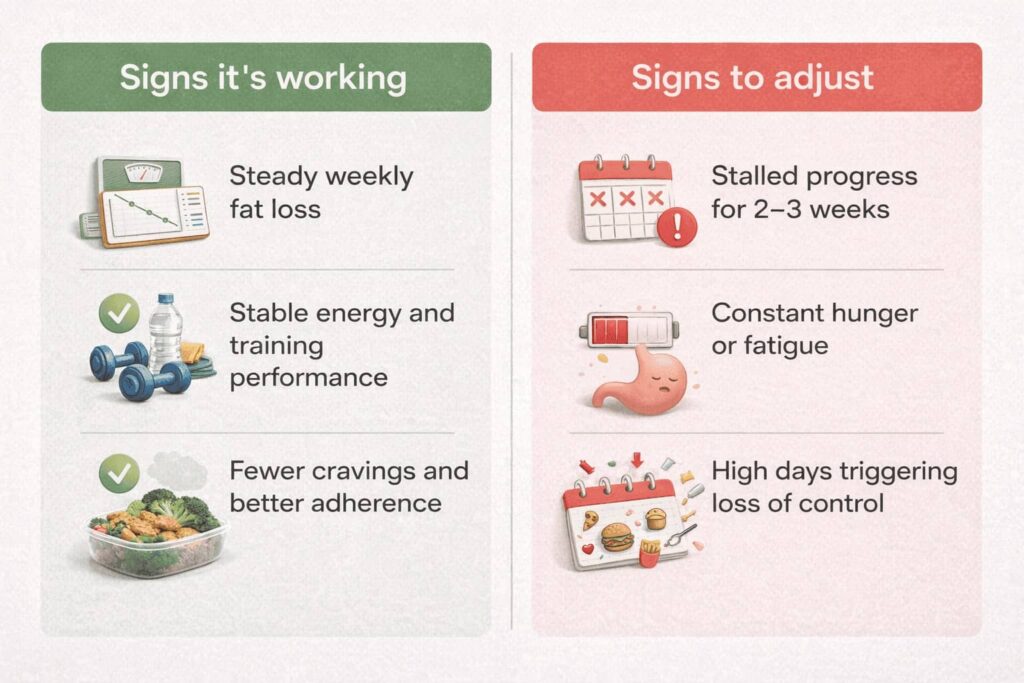
A Simple Evaluation Checklist
Before you start, ask yourself:
- Can I plan my week in advance?
- Do I know my weekly calorie target?
- Am I comfortable tracking intake most days?
- Can I keep protein consistent?
- Do my higher-calorie days serve a purpose (training, social events)?
If you answered “yes” to most, calorie cycling is worth trying.
FAQ: Calorie Cycling for Weight Loss
Is calorie cycling better than eating the same calories every day?
Not inherently. It’s a tool. For some, it improves adherence and performance; for others, a fixed intake works just as well.
Can I lose fat if I overeat on one day?
Yes—if your weekly calories are in a deficit. One higher day won’t erase progress.
How many high-calorie days should I have?
Most people do 1–3 per week. Choose what fits your training and lifestyle.
Do I need to change macros on different days?
Protein should stay similar. Carbs and fats can flex to match calories and activity.
Is calorie cycling safe?
For generally healthy adults, yes. If you have medical conditions or a history of disordered eating, consult a professional.
Conclusion: Is Calorie Cycling Worth Trying?
Calorie cycling for weight loss isn’t magic—but it is practical. By aligning calories with real life, workouts, and social plans, many people find it easier to stay consistent long enough to see results. Start with a clear weekly target, plan your days with intention, keep protein high, and adjust based on how your body responds. If flexibility keeps you on track, calorie cycling may be exactly the structure you’ve been missing.